Solar Breakers, Fuses & Panels
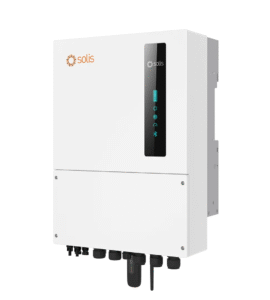
Solar Breakers, Fuses & Panels are critical components in photovoltaic (PV) systems, ensuring safety, efficiency, and reliable power distribution. These products protect solar arrays from overcurrent, short circuits, and electrical faults while managing power flow between solar panels, inverters, and the grid.
Solar Breakers, Fuses & Panels Key Features:
✔ Solar Breakers – DC-rated circuit breakers (up to 1500V) for PV systems, including UL 489B and IEC 60947 compliance.
✔ Solar Fuses – High-voltage DC fuses (1000V–1500V) for string protection, with UL 248-19 and IEC 60269-6 standards.
✔ Solar Combiner Panels – Enclosures with surge protection, fuse holders, and disconnect switches for organized PV string management.
✔ Rapid Shutdown Compliance – Meets NEC 690.12 requirements for fire safety.
✔ Weatherproof & Durable – NEMA 3R/4X enclosures for outdoor use.
✔ Compatibility – Works with solar inverters (e.g., SolarEdge, Enphase, SMA) and battery storage systems.
Solar Breakers, Fuses & Panels Common Applications:
-
Residential & commercial solar installations
-
Utility-scale PV farms
-
Off-grid and hybrid solar systems
1. Solar Panels (The Power Generators)
These are the most visible part of the system, converting sunlight into direct current (DC) electricity.
-
Types: Primarily Monocrystalline (high efficiency, black cells), Polycrystalline (blue cells, slightly less efficient), and Thin-Film (flexible, lower efficiency).
-
Key Electrical Specs:
-
Wattage (W): The power rating (e.g., 400W).
-
Open-Circuit Voltage (Voc): Maximum voltage with no load. Crucial for system design to avoid overvoltage.
-
Short-Circuit Current (Isc): Maximum current with no resistance.
-
Maximum Power Point (Vmp & Imp): The voltage and current at which the panel produces its rated power.
-
2. Solar Breakers & Disconnects (The Safety Switches)
These are the “on/off” switches and overload protectors for your electrical circuits. They are mandatory for safety and code compliance.
-
Purpose:
-
Isolation: To safely disconnect power for maintenance or emergencies.
-
Overcurrent Protection: To automatically trip and stop current flow in case of a fault (short circuit or overload), preventing fires and damage.
-
Common Locations in a Solar System:
-
DC Disconnect / Combiner Box Breaker: Located between the solar panels and the inverter. Allows you to shut off DC power from the array. Often incorporates fuses or breakers for each string.
-
AC Disconnect: Located between the inverter and the main electrical panel (grid-tied systems). Allows you to isolate the inverter from the grid.
-
Backfed Breaker in Main Panel: In grid-tied systems, the inverter’s output connects to a dedicated circuit breaker in your main service panel. This is also a critical disconnect point.
-
-
-
Breaker vs. Disconnect Switch: A disconnect is just a switch. A circuit breaker is a switch and an automatic overcurrent protection device. Many devices combine both functions.
3. Fuses (The Targeted Protectors)
Fuses are “sacrificial” devices that melt and break the circuit under specific overcurrent conditions. They are more targeted than breakers.
-
Key Purpose in Solar: String & Equipment Protection.
-
String Fuses: Used in the combiner box when you have multiple parallel strings of panels. If one string short-circuits, the other strings could back-feed a high current into it. The fuse on the faulty string blows, isolating it while the rest of the array keeps producing.
-
Rule of Thumb: If you have 3 or more parallel strings, fuses are typically required (per NEC). With only 1-2 strings, the current isn’t high enough to require them.
-
Protective Device (PV) Fuses: Used to protect specific components like inverters or charge controllers from reverse currents or fault currents.
-
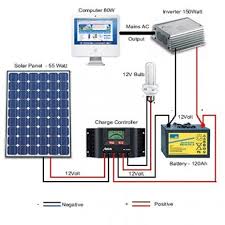
How They Work Together in a Typical System
Let’s follow the path of electricity:
-
Generation: Sun hits the solar panels, generating DC electricity.
-
Combination: Multiple panels are wired into strings. Strings are wired in parallel into a Combiner Box.
-
String Protection: Inside the combiner box, each string has a fuse (if 3+ strings) and the combined output goes through a DC disconnect breaker.
-
Conversion: The DC power travels through the protected DC circuit to the inverter, which converts it to AC power.
-
AC Integration & Protection: The AC output goes through an AC disconnect switch and then into a dedicated backfed circuit breaker in your main electrical panel.
-
Utility Connection: From the main panel, power is used in the home or fed back to the grid.
Key Considerations & Best Practices
-
Voltage & Current Ratings: All breakers and fuses must be rated for DC in the DC portions of the system. DC arcs are harder to extinguish than AC. Their voltage and current ratings must exceed the system’s maximum (using Voc and Isc).
-
Rapid Shutdown: Modern electrical codes (NEC) require rapid shutdown systems for firefighters. This involves special modules or devices at the panels that can quickly reduce DC voltage to a safe level when the system is shut down.
-
Sizing is Critical: Incorrectly sized overcurrent protection can fail to protect (if too large) or nuisance-trip (if too small). This requires professional calculation.
-
Quality Matters: Use components listed for solar applications (UL 1741, etc.) from reputable manufacturers (e.g., MidNite Solar, Eaton, Schneider Electric, ABB).
Simple Analogy Solar Breakers, Fuses & Panels
Think of a solar system like a garden hose network:
-
Solar Panels = The water spigots (source).
-
Wires = The hoses.
-
Inverter = A sprinkler that converts the hose water into a spray.
-
Breakers = Main shut-off valves you can manually turn and that automatically slam shut if a hose bursts (overload).
-
Fuses = Small, weak links in individual feeder hoses that break first if there’s a problem in just one branch, protecting the rest of the system.
In summary Solar Breakers, Fuses & Panels : Panels create power, breakers provide safe switching and circuit protection, and fuses offer targeted protection for parallel strings and equipment. All three are non-negotiable for a safe, code-compliant, and reliable solar installation. Always consult with a qualified solar installer or electrician for system design.
For More Details Contact us on 0304-1111-988
Also Follow our Facebook Page